When you buy through links on our articles, Future and its syndication partners may earn a commission.

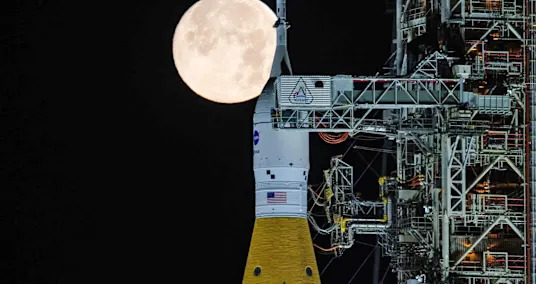
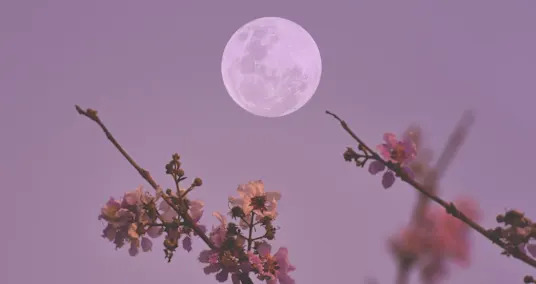
The first full moon of spring rises on April 1 and it plays a crucial role in setting the date of Easter.
The official moment that the moon will turn full is 10:12 p.m. EDT. Interestingly, at the instant of that full moon, its position in the sky will place it about a dozen degrees to the southeast of the spot that is occupied by the sun on the first day of autumn. And the full moon occurring nearest to the autumnal equinox is traditionally called the Harvest Moon. What sets the Harvest Moon apart from the others is that, instead of moonrise occurring at its normal average of 50 minutes later each day, it seems to rise at nearly the same time for several nights.
The first full moon of spring also has a special branding: the Paschal full moon or the Paschal Term — 14 or 15 Nisan on the Jewish Calendar, which also marks Pesach or Passover. Easter is observed on the Sunday after the Paschal Full Moon. So, according to the current ecclesiastical rules, Easter is to be celebrated on April 5. Interestingly, Easter can fall as early as March 22 and as late as April 25. So, by these standards, Easter is coming a bit early in the calendar this year.
Arcane rules for scheduling
Interestingly, however, these rules also state that the vernal equinox is fixed on March 21, even though worldwide from the years 2008 through 2103 it will occur no later than March 20. Hence, there can sometimes be discrepancies between the ecclesiastical and astronomical versions for dating Easter. In the year 2038, for instance, the equinox falls on March 20 with a full Moon the next day, so astronomically speaking, Easter should fall on March 28 of that year. And yet, as mandated by the rules of the Church, Easter in 2038 will be observed as late as it can possibly come, on April 25!

Thus, Easter, in practice, is determined from other formulae such as Epachs and Golden Numbers.
Also, in contrast to the Harvest Full Moon, the Paschal full moon appears to rise considerably later each night. In the table below, we've provided some examples for ten North American cities.
The local moonrise times for March 31, April 1 and April 2 are provided, the middle date being that of the Paschal Full Moon.
Although normally the moon rises about 50 minutes later each night, over this three-night interval for our relatively small sampling, we can see that the rising of the Paschal moon comes, on average, just over 65 minutes later each night. A quick study of the table shows that the night-to-night difference is greatest for the more northerly locations (Edmonton, located at latitude 53.6ºN., sees moonrise come an average of 78 minutes later). Meanwhile, the difference is less at more southerly locations (at Miami, Florida, located at latitude 26ºN, the average difference is just under 55 minutes).
Top telescope pick

The Celestron NexStar 4SE is ideal for beginners wanting quality, reliable and quick views of the moon.
The reason for this seasonal circumstance is that the moon appears to move along the ecliptic and at this time of year, when rising, the ecliptic makes its largest angle with respect to the horizon for those living in the Northern Hemisphere.
In contrast, for those living in the Southern Hemisphere, the ecliptic at this time of year appears to stand at a more oblique angle to the eastern horizon. As such, the difference for the time of moonrise is noticeably less than the average of 50 minutes per night. In Sydney, Australia, for instance, (where the full moon occurs on the calendar date of April 2), the night-to-night difference amounts to just under 27 minutes.
If you're looking for a telescope or binoculars to observe the moon, our guides for the best binocular deals and the best telescope deals can help. Our best cameras for astrophotography and best lenses for astrophotography can help you get ready to capture our lunar neighbor in stunning detail.
Joe Rao serves as an instructor and guest lecturer at New York's Hayden Planetarium. He writes about astronomy for Natural History magazine, Sky and Telescope, The Old Farmer's Almanac and other publications.
LATEST POSTS
- 1
 10 Demonstrated Tips to Boost Your New Android Cell phone: A Thorough Aide
 - 2Drones, physics and rats: Studies show how the people of Rapa Nui made and moved the giant statues – and what caused the island’s deforestation
- 3Limited Rain Chances in Brazil Boost Coffee Prices
- 4Ski Resorts Universally: A Colder time of year Wonderland Guide
- 5The Reduced Portage Horse: An Inheritance Reconsidered for Present day Experience



- Make your choice for the music application with the most amicable connection point!
- Farmers worry about rising cost of fertiliser
- Foreign journalist kidnapped in Iraq: Interior Ministry
- Single women risk rape and exploitation in search for better life in Europe
- Inconceivable Spots To Stargaze All over The Planet
- UN mission says no evidence Hezbollah rearming in southern Lebanon
- Countdown to Artemis II: What to know about NASA's moon mission
- Are protests pushing Iran's Islamic regime toward a tipping point?
- Most loved Solace Food: What's Your Definitive Comfortable Dinner?